Thursday, August 23, 2018

Extreme precipitation in Western Ghats and Kerala floods: NASA captures the images!


India Monsoon - August 13 to 20, 2018. Credits: NASA/JAXA/SSAI/Hal Pierce

The NASA has provided estimates of monsoon rainfall that affected India from August 13 to 20 that has devastated the south Indian state of Kerala, located in the southwest corner near the bottom of the peninsula. The huge rains marooned most of the state, about 370 or more people have reportedly died and about 800000 people have been displaced as a result of the extreme flooding and ensuing mudslides.

According to the NASA, “Accumulated IMERG rainfall estimates for the 1-week period from Aug. 13 to 20, 2018 showed two bands of heavy rain across India. The first band appeared much broader and extends across the northern part of the peninsula with weekly rainfall totals ranging from over 120 mm (~5 inches) towards the western half of the peninsula to as much as 350 mm (~14 inches) over parts of the eastern half towards the Bay of Bengal. This first band is associated with the general monsoon circulation”.

NASA said that, “The second band appeared more concentrated and intense and is closely aligned with the southwest coast of India and the Western Ghats where onshore flow was enhanced by an area of low pressure embedded within the general monsoon.  Weekly rainfall totals in this band are generally over 250 mm (~10 inches) with embedded areas exceeding 400 mm (~16 inches). The maximum estimated value from IMERG in this band was 469 mm (~18.5 inches)”.


Ranjan Panda
Convenor, Combat Climate Change Network, India

Email: ranjanpanda@gmail.com
Tweet @ranjanpanda
Tweet @MahanadiRiver

Average monsoon rainfall figures are of not much use! Climate change concerns remain: Ranjan Panda


It is being said that the Indian Meteorological Department’s (IMD) predictions of a normal monsoon for 2018 may prove almost true.  It was being feared that a possibility of El Nino event developing in the second half of the season would bring a deficit monsoon.  However, the southwest monsoon has turned out to be a reasonably good one so far, as being reported.

The Indian Express on 23rd August (See the link at the end) reported that the country as a whole has, as on August 22, cumulatively received an area-weighted average rainfall of 605 mm during the current monsoon season from June 1. This is only 6.5 per cent below the historical long period average of 647.3 mm, which is well within the “normal” departure range of 10 per cent on either side.

IMD’s predictions are being considered right for this year looking into the average rainfall figures.  The Indian Express report says, “Moreover, as the accompanying table shows, the rains have been normal in all the three months of the season so far, making it as good a monsoon as in 2016 and 2017. Also, much of the country — barring Bihar, Jharkhand and the North-East states — received enough rains for farmers to take up kharif sowing operations. Some areas such as Marathwada, North Karnataka, Saurashtra-Kutch and North Gujarat have experienced dry spells, affecting crop growth at the vegetative growth phase, but the situation is nowhere as serious as it was during the drought years of 2014 and 2015”.

(Table Source: Indian Express, 23 Aug 2018)

However, it will not be good to be happy with such general average projections.  Actually the so called normal rainfall year is no more capable to provide the much needed support to our farmers as because the erratic nature of rainfall does a lot of damages that we don't take into account. The small and marginal farmers suffer most!

Extreme precipitation events have increased and there is rains have done heavy damages to the kharif crops in many parts.  That’s another dimension which needs to be taken care of while planning our crops.  Time has come to decentralise rainfall projections as well as related crop plans.  Climate change is already affecting small and marginal farmers the most, the impacts will aggravate.

Link to the Indian Express article: https://indianexpress.com/article/india/southwest-monsoon-el-nino-indian-monsoon-lok-sabha-elections-kharif-crop-farmers-5319978/


Ranjan Panda
Convenor, Combat Climate Change Network, India

Tweet @ranjanpanda
Tweet @MahanadiRiver

Wednesday, August 8, 2018

Indigenous Communities hold key to fight against deforestation & climate change: Ranjan Panda

On the International "Day of the World's Indigenous People" I would like  to share my recently published article in India Climate Dialogue that puts a strong case for recognising rights of the indigenous communities over their local forest resources to save the world from the climate catastrophe.  In a world, which has chosen an aggressive path of GDP centric growth models - that has necessarily happened at the cost of our natural resources - the indigenous communities in India as well as globally have the answers to a lot of the problems this growth path has created.  And most interestingly, in these local solutions, they have a larger message for the global communities.  Hope the governments understand the fact that it is in benefit of their people as well as the entire world to recognise rights of the local and indigenous communities over forest resources and to support these communities improve their lives livelihoods.  These communities already practice many green pathways to life and economy towards which the world communities plan to move now in order to be climate resilient.

Strengthen local forest rights for best climate solutions

,  15.06.18

India needs to proactively include indigenous communities and forest dwellers in its efforts to restore and expand forest cover to sequester carbon, and not exclude them from forestry management 


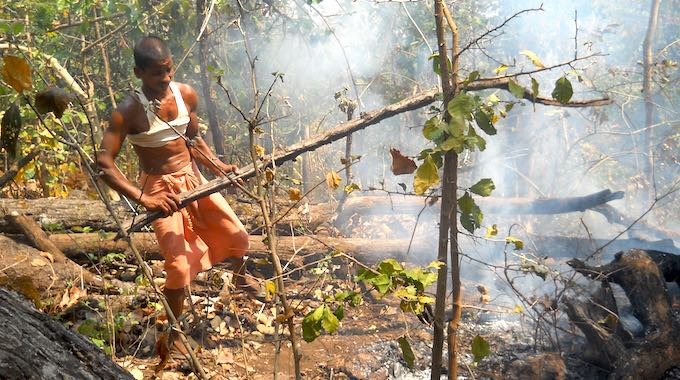
A group of tribal voluntary forest guards in Thengapalli forest in Odisha (Photo by Ranjan K Panda)
In India, a new wave of admiration about our traditional knowledge has emerged in public discourse, but it is not reflected in the ways the State wants to manage our forests. Politicians, bureaucrats and intellectuals are holding forth on importance of indigenous knowledge and practices. For instance, the Indian government has been championing the cause of Yoga in the international arena, and has successfully put it on the global map by pushing for an International Yoga Day. Similarly, traditional medicines including Ayurveda have become a buzzword among policymakers.
In this rush to promote India’s traditional knowledge and practices, policymakers have seemingly forgotten another longstanding, rich tradition of India. Indians, especially the indigenous communities living in and around forests, have been living with and protecting India’s biodiversity-rich forests for thousands of years, with a vast repository of lived and traditional knowledge about forest ecosystems.
Most importantly, many of them have demonstrated scientific methods of conservation much before modern forest science emerged. Thousands of villages across India have been protecting natural forests for decades. For example, over 10,000 communities in Odisha have been protecting state-owned forests, often through voluntary labour, and have a deep understanding and commitment to conservation. The vast number of scared groves across the country remains a living testimony to the traditional conservation ethics of Indian tribal communities and forest dwellers.
Neglected tradition
Unfortunately, the centralised forest governance system imposed by the British colonial administration and continued by the post-independence Indian State has not only forgotten to recognise these traditions and practices, but has also been trying its best to destroy these systems to commercialise forests. More unfortunately, this is being done at a time when the entire world, including the scientific community, have started to realise that natural forest conservation holds one of the most important keys to our fight against the deadliest challenge of our time — climate change.
“Natural Climate Solutions (NCS) can provide over one-third of the cost-effective climate mitigation needed between now and 2030 to stabilise warming to below 2 degrees Celsius. Alongside aggressive fossil fuel emissions reductions, NCS offer a powerful set of options for nations to deliver on the Paris Climate Agreement while improving soil productivity, cleaning our air and water, and maintaining biodiversity,” argue a team of scientists and researchers led by B.W. Griscom.
To fulfil the Paris Agreement Goals, as reflected in the country’s Nationally Determined Contribution (NDC), India has set ambitious mitigation strategies. These strategies include increasing the forest and tree cover by five million hectares and improving the quality of forest cover in another five million hectares of forest land.

A meeting of a local community to discuss forestry issues (Photo by Ranjan K Panda)
It is estimated that this would create an additional carbon sink of two to three billion tonnes of carbon dioxide equivalent (CO2e) by 2030. It is assumed that this target is cumulative and would represent an average annual carbon sink of 167–200 million tonnes CO2e (MtCO2e) over the period 2016-20. Over half of this target could be achieved by the Green India Mission, which is expected to enhance annual carbon sequestration by about 100 MtCO2e.
India has also been part of the Bonn Challenge, a global effort to bring 150 million hectares of deforested and degraded land into restoration by 2020 and was later scaled up to aim for a total of 350 million hectares by 2030. The Government of India made a Bonn Challenge pledge to restore 13 million hectares of degraded land by 2020 and an additional eight million hectares by 2030.
Ambitious goals
India’s NDCs and Bonn Challenge goals are ambitious. Some of the organisations monitoring country actions towards meeting the Paris Climate Goals rate India’s policy pathways positively. The Climate Action Tracker (CAT), an independent database, in its latest update on April 30 provides positive ratings to India. It maps the country’s probability of attaining its NDC targets in the yellow category that is compatible with a rise of two degrees Celsius from pre-industrial times. The analysis shows that India can achieve its NDC target under the current climate change and environmental policies.
The CAT analysis highlighted that the plan to add to India’s stored carbon must reach high targets within the existing frameworks of the National Green Mission and the draft Forest Policy 2018. It stated that the draft National Forest Policy would better support India’s targets.
However, an analysis of the proposed rules and regulations in the draft policy shows that it would critically jeopardise the chances of meeting India’s targets.
The Government of India on March 14 circulated the new draft Forest Policy for comments. If it is adopted, the policy will replace an earlier one promulgated in 1988. The 1988 policy signified a historic shift in India’s forest governance, as it recognised the primacy of ecological value of forests, and acknowledged the first claim of tribal and other forest dwelling communities over forests. The landmark Forest Rights Act (FRA) followed in 2006, which recognised legal rights of tribals and forest dwellers over forests.
Policy regression
The new draft policy reverses the gains of the 1988 policy and the Forest Rights Act and proposes regressive practices of forest governance based on the needs of the government and private sectors. Although the draft shows intent to combat climate change, and aims at promoting mitigation and adaptation efforts, they are not supported adequately as it overturns the focus of the previous policy and vests almost absolute power on the forest bureaucracy by eliminating the role of local, indigenous and tribal communities from the management and conservation of forests.
The draft policy has been criticised by conservationists, ecologists, tribals and community representatives. The main criticisms include the use of the climate change threat to recentralise power to forest bureaucracy at the cost of communities; deliberate subversion of the landmark Forest Rights Act; and facilitation of the land and forest grabbing, historically owned and managed by tribals and other forest dwellers, by private companies for industrial plantations.
The strategies of bureaucracy-led, large-scale afforestation and forest restoration with involvement of private sector would likely fail, lead to conflicts and waste of scarce financial resources. The immense opportunity for climate change mitigation and adaptation through a rights-based forest protection and restoration movement provided by the Forest Rights Act has been ignored in this draft Forest Policy.
That’s the reason Climate Scorecard, a US-based civil society coalition that monitors and ranks the climate action of leading Greenhouse Gas (GHG) emitting countries, has rated India’s draft Forest Policy at the lowest in a 4-level ranking system. The ranking, which assessed the draft, took into consideration the views and comments from Indian ecologists and forestry experts such as Madhav Gadgil, Ramchandra Guha, Sharad Lele and serving foresters.
Compensatory afforestation
About a month before the draft Forest Policy was circulated, another proposed policy decision was opened for public comments. On February 16, India’s environment ministry released the draft Compensatory Afforestation Fund (CAF) Rules, 2018. These rules aim at undoing the FRA and plan to vest almost absolute power in the Forest Department. According to CAF Rules, the Forest Department would decide how USD 8 billion from the Compensatory Afforestation Fund Management and Planning Authority (CAMPA) Fund would be utilised.

Local communities often know how to best manage their forests (Photo by Ranjan K Panda)
The CAF Rules don’t respect the rights granted to nearly 200 million indigenous people and forest dwellers by FRA and will likely promote monoculture plantations, displacing forest dwellers. Extensive documentation has been done that shows dozens of conflicts where communities have been displaced by such plantations. Ignoring indigenous and local communities, who have been the best managers of India’s natural forest resources and have helped preserve majority of its high biodiversity forests is likely to lead to the failure of CAMPA. The Indian government therefore, needs to revise the draft rules and incorporate the suggestions given by indigenous and forest-based communities, environmentalists and activists.
Cancelling informed consent
The draft also does away with the provision of free, prior and informed consent, more commonly known as FPIC, of the village councils of forest communities before starting compensatory afforestation projects. This in turn would create significant risk of dispossession and displacement of some of the most vulnerable forest communities in the world.
India’s forestry targets have already been criticised by local and tribal communities as well as civil society for being overly focused on commercial monoculture and for ignoring community rights over forests. These latest initiatives by the Indian government that would dilute forest rights of communities raises fresh doubts over India’s commitment to a socially just and sustainable pathway to achieve its Paris Climate Agreement goals.
If we love our indigenous cultures and practices, then we must not ignore the role of indigenous communities in protecting our vital natural forests that are rich in biodiversity.
In recent research that analysed contribution of local communities’ contribution to climate change mitigation by looking at carbon storage in collective lands, it was established that communities that claim and own their collective lands have so far sequestered at least 54,546 million tonnes of carbon equivalent — roughly four times the world’s annual emissions. The study, carried out by Rights and Resources Initiative, Woods Hole Research Centre and World Resources Institute, calls for recognition of the world’s indigenous and local communities in climate stabilisation and carbon sequestration.
The Indian government must consider these issues and experiences seriously before going ahead with finalisation of the draft Forest Policy and CAF rules. If we need to go back to our tradition on anything at all, then this is it. We need to recognise the traditional forest conservation practices, ensure rights of the indigenous communities over these forests and facilitate their role in meeting our climate goals. Ignoring the communities’ rights over forests and ignoring the real forest science, which confirms that natural biodiversity-rich forests mitigate climate impacts the best, would be disastrous.
Source: http://indiaclimatedialogue.net/2018/06/15/strengthen-local-forest-rights-for-best-climate-solutions/
===

Ranjan K Panda
Convenor, Combat Climate Change Network, India

Email: ranjanpanda@gmail.com
Skype: ranjan.climatecrusader
Tweet @ranjanpanda
Tweet @MahanadiRiver

Hothouse Earth: Just the Paris Agreement is not enough to fight the ensuing devastation – Ranjan Panda

Currently, the Earth System is on a Hothouse Earth pathway driven by human emissions of greenhouse gases and biosphere degradation toward a planetary threshold at ∼2 °C  (Image Credit: PNAS)

The entire world is currently discussing this much important latest scientific paper published in the PNAS about the risk of Earth entering into what the scientists call “Hothouse Earth” conditions.  The paper, with lead authorship of Will Steffen (and many co-authors) from the Stockholm Resilience Centre of the Stockholm University.  The paper, that needs to gravely worry us all, basically tells that “Even if the carbon emission reductions called for in the Paris Agreement are met, there is a risk of Earth entering what the scientists call “Hothouse Earth” conditions.” 

A “Hothouse Earth” climate will in the long term stabilize at a global average of 4-5°C higher than pre-industrial temperatures with sea level 10-60 m higher than today, says this study, suggesting, “maximizing the chances of avoiding a “Hothouse Earth” requires not only reduction of carbon dioxide and other greenhouse gas emissions but also enhancement and/or creation of new biological carbon stores.”

Currently, global average temperatures are just over 1°C above pre-industrial and rising at 0.17°C per decade and the Paris Agreement asks to limit it between 1.5°C to 2.0°C. According to the lead author, "Human emissions of greenhouse gas are not the sole determinant of temperature on Earth. Our study suggests that human-induced global warming of 2°C may trigger other Earth system processes, often called “feedbacks” that can drive further warming - even if we stop emitting greenhouse gases."

Ten natural feedback processes have been considered by the authors.  These are: permafrost thaw, loss of methane hydrates from the ocean floor, weakening land and ocean carbon sinks, increasing bacterial respiration in the oceans, Amazon rainforest dieback, boreal forest dieback, reduction of northern hemisphere snow cover, loss of Arctic summer sea ice, and reduction of Antarctic sea ice and polar ice sheets.  Some of these are “tipping elements” that lead to abrupt change if a critical threshold is crossed. These feedbacks could turn from being a “friend” that stores carbon to a “foe” that emits it uncontrollably in a warmer world, warns the study.

The study confirms that cutting greenhouse gases are not enough.  “Maximizing the chances of avoiding a “Hothouse Earth” requires not only reduction of carbon dioxide and other greenhouse gas emissions but also enhancement and/or creation of new biological carbon stores, for example, through improved forest, agricultural and soil management; biodiversity conservation; and technologies that remove carbon dioxide from the atmosphere and store it underground,” says the paper. 

(The above note is prepared from the story about this study that appeared in www.stockholmresilience.org)

====
Our Note: As has been rightly emphasised by the paper, humans need to redefine their relationship with Earth and Ecosystems.  We need to chart new pathways of living in harmony with nature and drastically rethink the way our economic growth models are working at the moment.  If necessary, we need to slow down on such growth and promote forest and natural resources conservation measures through complete involvement of local people and indigenous communities, promote green communities and infrastructure in our ever growing urban spaces, and many more efforts that can help us from saving from the ensuing disastrous scenarios. Paris Agreement is as such not enough to save us from the “Hothouse Earth”, we need more actions than promised there.


Ranjan Panda

Convenor, Combat Climate Change Network, India

Skype: ranjan.climatecrusader
Tweet @ranjanpanda
Tweet @MahanadiRiver

Monday, August 6, 2018

Problems in India with regard to River pollution data: Ranjan Panda


Can we fight river pollution without having proper data and coordination among different stakeholders?

Sunday, August 5, 2018

Friendship Day Thought - 5th August 2018: Ranjan Panda


A real friend is like Mother Nature who stays with you forever, bears all your nonsensical attitudes & acts, but can punish you with disastrous consequences when you cross your limits of abusing her. Then, most importantly, helps you cope and rebuild after you have learnt the lesson...

Happy Friendship Day!

Saturday, August 4, 2018

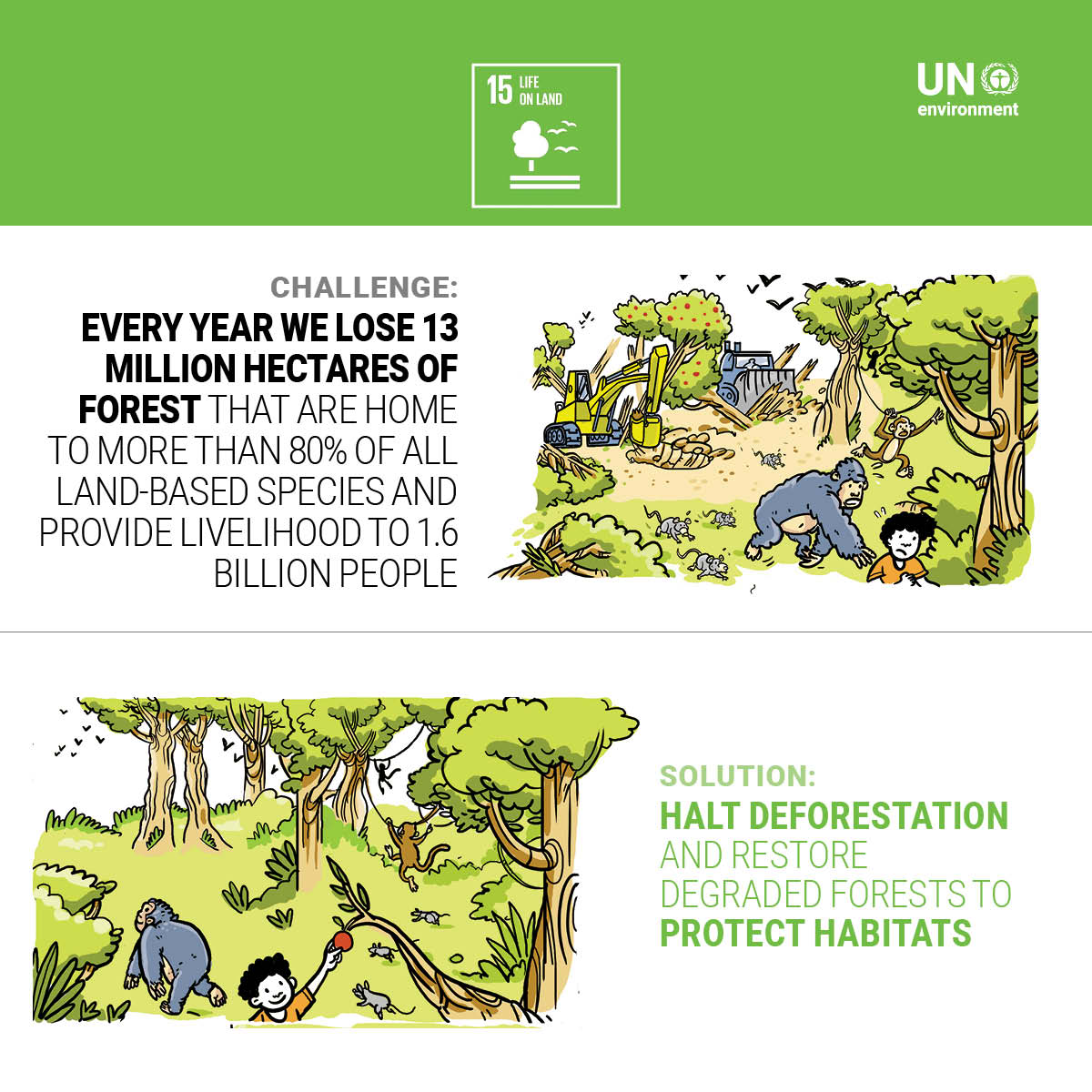
13 million ha of forests destroyed each year, we need to work with indigenous communities for restoration: Ranjan Panda

(Pic Source: @UNEnvironment)

Global deforestation continues at an alarming rate: 13 million hectares of forest are destroyed every year. (UN)

The best way to work towards restoration of degraded forests is by working with local and indigenous communities by vesting in them the rights over the forest resources, partnering with them to integrate their local knowledge for promotion of local  natural species diversities.
- Ranjan Panda


=== 
Combat Climate Change Network, India
Email: ranjanpanda@gmail.com
Skype: ranjan.climatecrusader
Tweet @ranjanpanda
Tweet @MahanadiRiver