Getting habituated to a habit...
There is a competition to live a life that takes you farther from your roots. Our roots are inevitably ecological. Having gained the wonderful experience of knowing ecology from close corners over the last two decades, I behave like an objective chronicler of it. This blog is meant to be a contemporary chronology of ecology, economics and we the being. The blog will have text and visuals. Ranjan Panda
A new study finds out that climate
change is making stronger El Ninos, which change weather worldwide and heat up
an already warming planet.Examining 33
El Ninos since 1901, the scientists who conducted this study found that since
the 1970s, El Ninos have been forming farther to
the west in warmer waters, leading to stronger El Ninos in some cases.
A
powerful El Nino can trigger drought in some places, like Australia and India.
And it can cause flooding in other areas like California. The Pacific gets more
hurricanes during an El Nino and the Atlantic gets fewer.
Oxfam's Inequality rank has this bad news for India. While we claim to be among fastest growing economy, the growth seems to be happening only for the super rich.
The index ranks 157 countries on their policies on social spending, tax, and labour rights. As per the report, countries such as South Korea, Namibia and Uruguay are taking strong steps to reduce inequality. However, countries like India and Nigeria did very badly.
The NASA recently said that globally July 2018 was the third
warmest July since reliable measurements began in 1880, 0.78°C warmer than the
1951-1980 mean. The warmest Julys, in 2016 and 2017, were 0.82°C and 0.81°C, respectively.
July 2018 temperature was +1.06°C relative to the 1880-1920 base period, where
the latter provides our best estimate of pre-industrial global temperature.
The last three Julys on Earth have been the three warmest
ever recorded. But, they may also be the warmest months to occur on our planet
in about 120,000 years, reports Mark Kaufman in the Mashabable India. http://bit.ly/2wzkUNN
Even though it is incorrect to describe the July 2018
climate conditions in the global hotspots as a “new normal” climate for those
regions, NASA study finds out that global warming has greatly increased the
frequency or chance of an extreme hot summer, e.g., two standard deviations or
more warmer than average 1951-1980 climate.
The NASA paper further said, “a strong El Nino contributed
to 2015-2018 warmth. However, we will argue that the present 12-month running
mean has already reached the inter-El Nino minimum global temperature, at a
value that is above the trend line for the average”.We may have entered a period of accelerated
global warming, said the paper further.
India Monsoon - August 13 to 20, 2018. Credits: NASA/JAXA/SSAI/Hal Pierce
The NASA has provided estimates of monsoon rainfall that
affected India from August 13 to 20 that has devastated the south Indian state
of Kerala, located in the southwest corner near the bottom of the peninsula.
The huge rains marooned most of the state, about 370 or more people have reportedly died and about 800000 people have been displaced as a result of the extreme flooding and ensuing
mudslides.
According to the NASA, “Accumulated IMERG rainfall estimates
for the 1-week period from Aug. 13 to 20, 2018 showed two bands of heavy rain
across India. The first band appeared much broader and extends across the
northern part of the peninsula with weekly rainfall totals ranging from over
120 mm (~5 inches) towards the western half of the peninsula to as much as 350
mm (~14 inches) over parts of the eastern half towards the Bay of Bengal. This
first band is associated with the general monsoon circulation”.
NASA said that, “The second band appeared more concentrated
and intense and is closely aligned with the southwest coast of India and the
Western Ghats where onshore flow was enhanced by an area of low pressure
embedded within the general monsoon.Weekly rainfall totals in this band are generally over 250 mm (~10
inches) with embedded areas exceeding 400 mm (~16 inches). The maximum
estimated value from IMERG in this band was 469 mm (~18.5 inches)”.
Australia’s Great Barrier Reef, under severe stress in a warmer, more acidic ocean, has returned from near-extinction five times in the past 30,000 years, researchers said on Monday. Details here: http://www.thehindu.com/sci-tech/energy-and-environment/great-barrier-reef-facing-its-toughest-test-ever/article24026991.ece Ranjan Panda Convenor, Combat Climate Change Network, India Tweet @ranjanpanda Tweet @MahanadiRiver Skype: ranjan.climatecrusader Email: ranjanpanda@gmail.com
Something to be seen more often in the coming days. As I
have always been telling, urbanisation at the moment is happening at the cost
of the rural areas, their livelihoods and natural resources. There are many
conflicts happening already across the nation, unless we work towards bringing
equitable development these will grow and get difficult to resolve!
Ranjan Panda
Combat Climate Change Network, India
+91-9437050103
Email: ranjanpanda@gmail.com
'Leave us alone': India's villagers rebel against urbanisation
Indian farmers protest in Gandhinagar, Gujarat state, to protect their land. Photograph: Sam Panthaky/AFP/Getty
As you move west from the crowded old neighbourhoods of inner-city Ahmedabad, the roads broaden, buildings rise taller and BMWs line the streets. Old-timers here remember watching these wealthy, modern neighbourhoods engulf the countryside – the lush fields of wheat and corn that are now gone.
Read more at: https://www.theguardian.com/cities/2018/feb/12/india-villagers-rebel-urbanisation-gujarat
The waters along Tasmania’s north-west coastline have taken on a bizarre, glowing appearance in recent days. Photographs taken off Preservation Bay and Rocky Cape showcase bioluminescent waters caused by a natural phenomenon known as noctiluca scintillans (AKA sea sparkle), which happens when tiny plankton turn blue in self-defence.
The phenomenon, which is best seen in calm, warm seas, is foreboding. “The displays are a sign of climate change,” Anthony Richardson, from the CSIRO, told New Scientist after an occurrence in Tasmania in 2015.
Russia's Lake Baikal, a world heritage site, which contains about one-fifth of the unfrozen freshwater on the earth’s surface has got respite from a polluting paper and pulp industry just three years ago. However, the lake fights new environmental battles. An interesting read... https://www.nytimes.com/2017/03/13/world/europe/a-russian-lakes-future-hangs-on-tourists-and-toilets.html?_r=0 Ranjan Panda Water Initiatives Odisha (WIO) Combat Climate Change Network, India Email: ranjanpanda@gmail.com Tweet @ranjanpanda Tweet @MahanadiRiver
Most studies on the impact of extreme weather events focus on droughts or rainfall shocks in tropical or dry regions. However, cold shocks in the form of extremely harsh winters can also be damaging for children. While affecting all regions with continental climate and large seasonal variations in temperature, such as Russia, inland China or the Himalayas, these shocks are especially relevant in Mongolia. More here: https://blogs.unicef.org/evidence-for-action/children-bear-the-cost-of-extreme-weather-new-evidence-from-mongolia/
[Cairo] Experts and stakeholders in Egypt warn of imminent water poverty as a result of the Ethiopian Renaissance Dam, which is about to become operational. Meanwhile, agricultural production consumes about 85 per cent of the country’s water resources, half of which goes towards rice irrigation.
Rice cultivation consumes more than 10 billion cubic meters of water annually, or more than one-sixth of Egypt's share of Nile water, Khaled Ghanem, professor of Organic Farming in Al-Azhar University, told SciDev.Net. And this does not account for the water used for cultivation in unauthorized areas, estimated to be about a third of that used in authorized ones, he explained. For more, please read the following link: http://www.scidev.net/global/design/news/egyptian-invention-rice-irrigation-water.html?utm_medium=email&utm_source=SciDevNewsletter&utm_campaign=international%20SciDev.Net%20update%3A%206%20February%202017
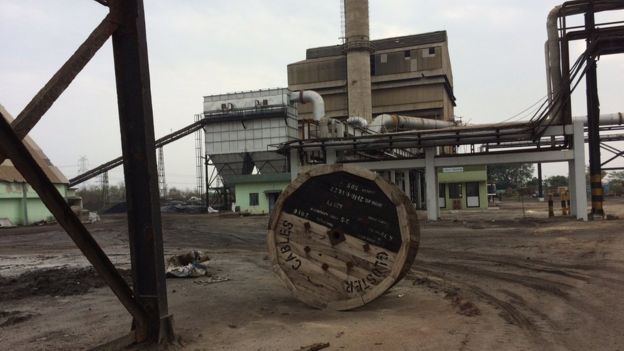
Image captionThe Tuticorin zero-emissions plant to make soda ash
Two world-leading clean energy projects have opened in the south Indian state of Tamil Nadu.
A £3m industrial plant is capturing the CO2 emissions from a coal boiler and using the CO2 to make valuable chemicals. It is a world first.
And just 100km away is the world's biggest solar farm, making power for 150,000 homes on a 10 sq km site.
The industrial plant appears especially significant as it offers a breakthrough by capturing CO2 without subsidy.
Built at a chemical plant in the port city of Tuticorin, it is projected to save 60,000 tonnes of CO2 emissions a year by incorporating them into the recipes for baking soda and other chemicals.
Here's how it works:
The plant operates a coal-fired boiler to make steam for its chemical operations.
CO2 emissions from the boiler's chimney are stripped out by a fine mist of a new patented chemical.
A stream of CO2 is fed into the chemicals plant as an ingredient for baking soda and other compounds with many uses, including the manufacturing of glass, detergents and sweeteners.
Zero emissions
The owner of the chemicals plant, Ramachadran Gopalan, told a BBC Radio 4 documentary: "I am a businessman. I never thought about saving the planet. I needed a reliable stream of CO2, and this was the best way of getting it."
He says his operation has now almost zero emissions. He hopes soon to install a second coal boiler to make more CO2 to synthesise fertiliser.
The chemical used in stripping the CO2 from the flue gas was invented by two young Indian chemists. They failed to raise Indian finance to develop it, but their firm, Carbonclean Solutions, working with the Institute of Chemical Technology at Mumbai and Imperial College in London, got backing from the UK's entrepreneur support scheme.
Their technique uses a form of salt to bond with CO2 molecules in the boiler chimney. The firm says it is more efficient than typical amine compounds used for the purpose.
Image captionThe plant is projected to save 60,000 tonnes of CO2 emissions a year
They say it also needs less energy, produces less alkaline waste and allows the use of a cheaper form of steel - all radically reducing the cost of the whole operation.
The firm admits its technology of Carbon Capture and Utilisation won't cure climate change, but says it may provide a useful contribution by gobbling up perhaps 5-10% of the world's emissions from coal.
Lord Oxburgh, former chairman of Shell, and now director and head of the UK government's carbon capture advisory group, told the BBC: "We have to do everything we can to reduce the harmful effects of burning fossil fuels and it is great news that more ways are being found of turning at least some of the CO2 into useful products."
Solar farm
Meanwhile, the nearby giant Kamuthi solar plant offers a marker for India's ambition for a rapid expansion in renewables.
Image captionThe world's largest solar farm at Kamuthi in southern India
It is truly enormous; from the tall observation tower, the ranks of black panels stretch almost to the horizon.
Prime Minister Modi is offering subsidies for a plan to power 60 million homes with solar by 2022 and aims for 40% of its energy from renewables by 2030.
For large-scale projects, the cost of new solar power in India is now cheaper than coal. But solar doesn't generate 24/7 on an industrial scale, so India has adopted a "more of everything" approach to energy.
The firm behind the solar plant, Adani, is also looking to create Australia's biggest coal mine, which it says will provide power for up to 100 million people in India. Renewables, it says, can't answer India's vast appetite for power to lift people out of poverty.
Image captionWill India stick to its renewables promises with Donald Trump as US president?
And questions have been raised recently as to whether India will stick to its renewables promises now President-elect Donald Trump may be about to scrap climate targets for the US.
At the recent Marrakech climate conference, China, the EU and many developing countries pledged to forge ahead with emissions-cutting plans regardless of US involvement. But India offered no such guarantee.
Some environmentalists are not too worried: they think economics may drive India's clean energy revolution.
Response to EIL by prominent citizens on 1.7 km stretch that runs through Mula-Mutha riverbank ecosystem
: The western zone bench of the National Green Tribunal (NGT) issued an interim stay on a proposed portion of the metro rail route passing through the Mula-Mutha riverbed in the city on Monday.
A two-judge bench of Justices U.D. Salvi and Dr. Ajay Deshpande passed the directive acting on an Environmental Interest Litigation (EIL) filed in the NGT on May 26 last year by a group of prominent Pune citizens, which contended that in the proposed metro rail alignment, a 1.7 km stretch passing through the left bank of the Mula-Mutha river could spell the death knell for the riverbank ecosystem along that route.
The petitioners in the EIL included Member of Parliament Anu Aga, senior journalist late Dileep Padgaonkar, architect Sarang Yadwadkar and environmentalist Aarti Kirloskar.
Phase I will be hit
A stay on work on this stretch, which falls on Line 2, will naturally affect work on the entire Phase I of the project. This line, totalling around 15 km in length and linking Vanaz with Ramwadi, is expected to be the first to be built in the project.
The lawyer representing the Pune Municipal Corporation (PMC) proposed that the Maharashtra Metro Rail Corporation (MMRC), which will implement the Pune Metro project, be made a respondent as well, to which the judges agreed. In the EIL, the petitioners had named the PMC, the Maharashtra Government, the Central government, the Delhi Metro Rail Corporation and the Maharashtra Pollution Control Board as respondents.
“This is nothing but delaying tactics on the PMC’s part to buy time,” Mr. Yadwadkar told The Hindu. He reiterated the need for the PMC to come up with an alternative route for this segment of the proposed network, while remarking that the objection in the EIL was specifically with regards to the proposed alignment on the riparian zone of the river, which was bound to be harmed if the project was implemented in its current form.
The project, touted as a panacea for Pune’s nightmarish traffic woes, was recently inaugurated by Prime Minister Narendra Modi on December 24 amid much political acrimony between the Bharatiya Janata Party (BJP) and the opposition Congress and Nationalist Congress Party (NCP) scrambling to take credit for it.
Many felt the project was hurriedly greenlighted keeping in mind the rapidly approaching Pune civic polls.
“This is an important ruling, which clearly proves that the inauguration of the project was done in a hasty manner with scant regard for environmental concerns,” said advocate Asim Sarode, who is representing the petitioners.
The next hearing has been postponed till January 26.
Earlier, in September last year, a report by the PMC’s Biodiversity Monitoring Committee had corroborated the objections in the EIL against the Pune Metro, stressing that the present alignment on the Mutha riverbed, from the Panchaleshwar temple to Nava Pul, would allegedly “destroy the biodiversity of what remained of the riparian zone (the interface or space between the existing water and the actual riverbank) still untouched by urban incursions.”
It had noted that the removal of trees to make way for the project would severely rupture the natural habitat of birds of at least 18 different species and adversely affect 63 species of exotic flowering plants.