Sunday, August 5, 2018

Friendship Day Thought - 5th August 2018: Ranjan Panda


A real friend is like Mother Nature who stays with you forever, bears all your nonsensical attitudes & acts, but can punish you with disastrous consequences when you cross your limits of abusing her. Then, most importantly, helps you cope and rebuild after you have learnt the lesson...

Happy Friendship Day!

Saturday, August 4, 2018

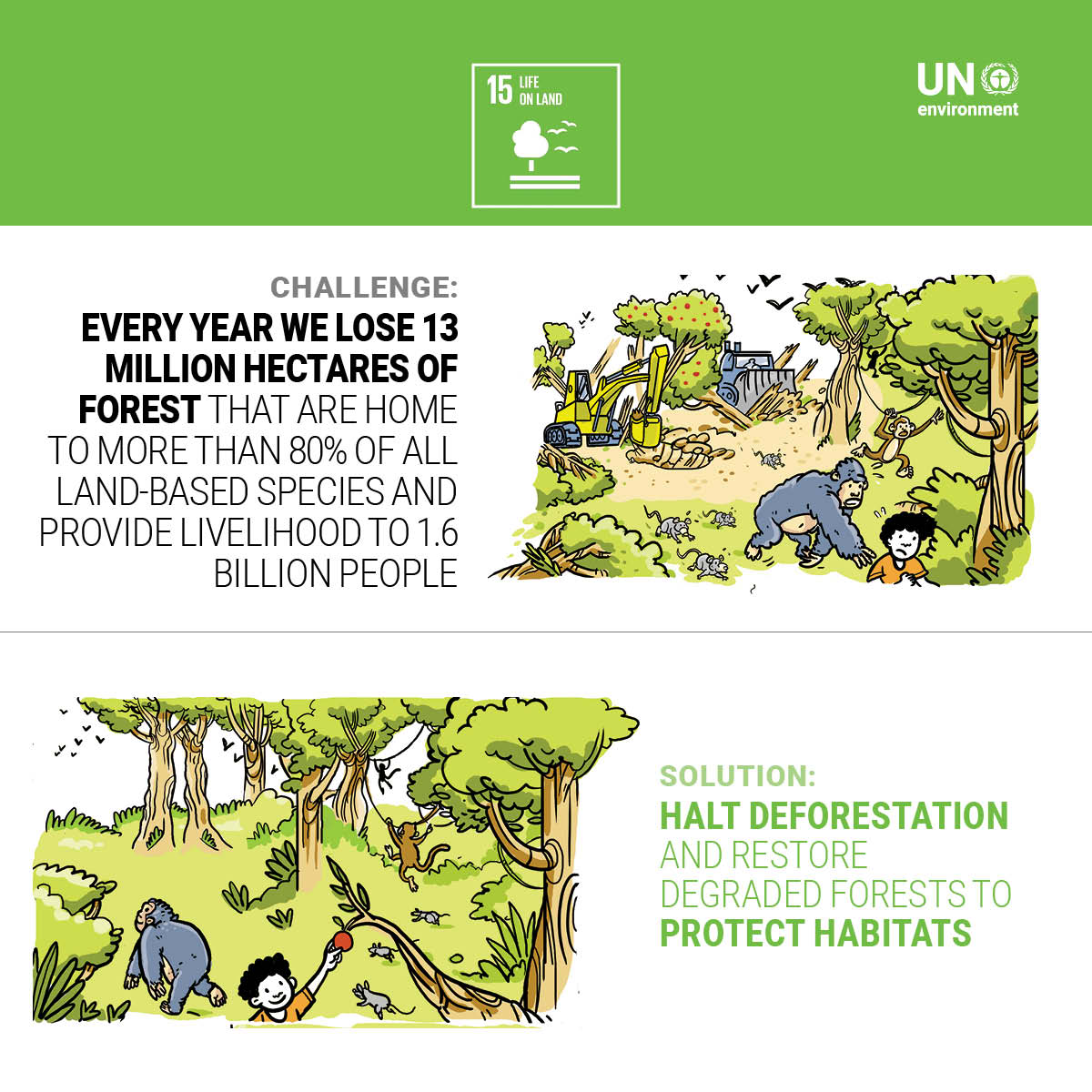
13 million ha of forests destroyed each year, we need to work with indigenous communities for restoration: Ranjan Panda

(Pic Source: @UNEnvironment)

Global deforestation continues at an alarming rate: 13 million hectares of forest are destroyed every year. (UN)

The best way to work towards restoration of degraded forests is by working with local and indigenous communities by vesting in them the rights over the forest resources, partnering with them to integrate their local knowledge for promotion of local  natural species diversities.
- Ranjan Panda


=== 
Combat Climate Change Network, India
Email: ranjanpanda@gmail.com
Skype: ranjan.climatecrusader
Tweet @ranjanpanda
Tweet @MahanadiRiver


Dangers of privatising water resources: Ranjan Panda


Friday, August 3, 2018

Breaking: 2017 – Third-warmest year on record !


2017 – Third-warmest year on record !

The ‘State of the Climate in 2017’ is just out.  According to this report, published by the American Meteorological Society, 2017 was the third-warmest year on record for the globe, trailing 2016 and 2015. The planet also experienced record-high greenhouse gas concentrations as well as rises in sea level. The following are some of the important revelations from extracted from the report. 

Green House Gases - 

In 2017, the dominant greenhouse gases released into Earth’s atmosphere—carbon dioxide, methane, and nitrous oxide— reached new record highs. The annual global average carbon dioxide concentration at Earth’s surface for 2017 was 405.0 ± 0.1 ppm, 2.2 ppm greater than for 2016 and the highest in the modern atmospheric measurement record and in ice core records dating back as far as 800 000 years. The global growth rate of CO2 has nearly quadrupled since the early 1960s.

Warmest non-El Niño year –

Notably, it was the warmest non-El Niño year in the instrumental record. Above Earth’s surface, the annual lower tropospheric temperature was also either second or third highest according to all datasets analyzed. The lower stratospheric temperature was about 0.2°C higher than the record cold temperature of 2016 according to most of the in situ and satellite datasets.

Glacier melting –

Preliminary data indicate that glaciers across the world lost mass for the 38th consecutive year on record; the declines are remarkably consistent from region to region. Cumulatively since 1980, this loss is equivalent to slicing 22 meters off the top of the average glacier.

Sea Surface Temperature –

Across the global oceans, the overall long-term SST warming trend remained strong. Although SST cooled slightly from 2016 to 2017, the last three years produced the three highest annual values observed; these high anomalies have been associated with widespread coral bleaching. The most recent global coral bleaching lasted three full years, June 2014 to May 2017, and was the longest, most widespread, and almost certainly most destructive such event on record.

Global mean sea level –

Global integrals of 0–700-m and 0–2000-m ocean heat content reached record highs in 2017, and global mean sea level during the year became the highest annual average in the 25-year satellite altimetry record, rising to 77 mm above the 1993 average.

Heavy precipitation –

Precipitation over global land areas in 2017 was clearly above the long-term average. Among noteworthy regional precipitation records in 2017, Russia reported its second wettest year on record (after 2013) and Norway experienced its sixth wettest year since records began in 1900.

Floods in India –

Across India, heavy rain and flood-related incidents during the monsoon season claimed around 800 lives.

Forest fires –

Devastating fires impacted British Columbia, destroying 1.2 million hectares of timber, bush, and grassland, due in part to the region’s driest summer on record. In the United States, an extreme western wildfire season burned over 4 million hectares; the total costs of $18 billion tripled the previous U.S. annual wildfire cost record set in 1991.


Ranjan K Panda

Convenor, Combat Climate Change Network, India
Skype: ranjan.climatecrusader
Tweet @ranjanpanda
Tweet @MahanadiRiver

Wednesday, May 30, 2018

Great Barrier Reef under severe threat: Scientists

(Pic: free sources in internet)

Australia’s Great Barrier Reef, under severe stress in a warmer, more acidic ocean, has returned from near-extinction five times in the past 30,000 years, researchers said on Monday.

Details here: http://www.thehindu.com/sci-tech/energy-and-environment/great-barrier-reef-facing-its-toughest-test-ever/article24026991.ece

Ranjan Panda
Convenor, Combat Climate Change Network, India

Tweet @ranjanpanda
Tweet @MahanadiRiver
Skype: ranjan.climatecrusader
Email: ranjanpanda@gmail.com

Wednesday, May 23, 2018

Press Release from Climate Scorecard: India's Draft Forest Policy will be counterproductive to the country's Paris Goals!


PRESS RELEASE
India’s Draft Forest Policy will be counterproductive to the country’s Paris Climate Commitments: says Climate Scorecard, a global civil society coalition!

New Delhi, 23rd May 2018 – The Climate Scorecard, that tracks the implementation of Paris Climate Commitments of top Greenhouse Gas (GHG) emitting countries, has analysed the Draft Forest Policy 2018 of India and has found out that it has potential to derail the country’s Paris Goals.  “We have found the policy to be a retrogressive, state-centered policy in intent, even as concepts like climate change and REDD+ are liberally sprinkled in the text”, said Ranjan Panda, Country Manager for India of the Climate Scorecard, in a press release.

“It is similar in intent and purposes to the Compensatory Afforestation Funds Act, 2016 scored by us last month, in that it seeks to enhance the control of forest departments over forests at the cost of communities. Given the past record of forest bureaucracy in India, there is little hope that this exclusionary, bureaucracy-centered forest policy will yield any positive results in mitigation and adaptation of climate change, and likely will have very negative outcomes”, said Ranjan Panda.

Ranjan Panda further said, “Our assessment found out that the 2018 Draft Forest Policy walks back on the gains of 1988 Forest Policy and the Forest Rights Act and seeks to go back to a state and private sector-based forest governance, which would not be healthy for India’s natural forests as well as climate commitments”.  

“The policy does recognise the challenges of ‘Climate Change’ but its strategies have been criticised by conservationists, ecologists, tribals and community representatives. The main criticisms are: i) its use of climate change threats to recentralise power with the forest bureaucracy at the cost of communities; ii) its deliberate subversion of the landmark Forest Rights Act; and iii) it facilitates grabbing of burdened forest lands by private companies for industrial plantations”, said Ranjan Panda in the release.

Ranjan Panda further said that, “The immense opportunity for climate change mitigation and adaptation through a rights based forest protection and restoration movement provided by the Forest Rights Act has been totally ignored in this new Forest Policy draft”.

The Draft Forest Policy 2018 has been given ONE STAR* rank by the Climate Scorecard because it contains strategies for climate change mitigation which are unworkable; fails to recognise the rights of tribal and forest dweller communities of forests; promotes industrial plantations by the private sector that may impact India’s Paris Climate Goals negatively, informed Panda.

The report-cum-alert for India can be assessed at: https://www.climatescorecard.org/2018/05/draft-forest-policy-2018/

For further details, contact:

Ranjan Panda
Country Manager for India, Climate Scorecard
Convenor, Combat Climate Change Network, India
Mobile: +91 9437050103/7008706434
Tweet @ranjanpanda
Blog: https://climatecrusaders.blogspot.in/

---

ABOUT CLIMATE SCORECARD
Climate Scorecard is a global initiative to ensure that the Paris Agreement meets its goal of preventing the earth’s atmosphere from exceeding the 2 degree Celsius global warming tipping point. Recent scientific reports, e.g. by the World Meteorological Organization (WMO) and the United Nations Environmental Programme (UNEP) warn that country emission reduction pledges, made to the Paris Agreement, are insufficient to prevent this from happening. Therefor Climate Scorecard is supporting a global campaign aimed at persuading leading greenhouse gas emitting countries to take further steps to reduce their emissions so that the Paris Agreement does not fail. This campaign, carried out through social media and in collaboration with local partner organizations, will provide citizens with monthly News Briefs and Action Alert messages about what their countries are or are not doing to further their commitment to the Paris Agreement. Climate Scorecard is an open source initiative managed through a partnership of two non-profit organizations-The Global Citizens Initiative ( www.theglobalcitizensinitiative.org) and EarthAction      ( www.earthaction.org  )
Learn More:    www.climatecorecard.org
*About the Rating System
Climate Scorecard uses a 4-star system to rate the country activities we report on each month:
★★★★ 
The country is Moving Forward to combat climate change and support the Paris Agreement
★★★
The country is moving in the Right Direction but needs to do more to reach its NDC pledges
★★
The country is Standing Still, with no change in either direction
★ 
The country is Falling Behind, and the activity is counterproductive to its Paris Agreement goals


Building an Inter-State Cooperation Framework for Management of Mahanadi River Basin: Conference report announcement

The report is complete, we will share with you soon.  Seek your cooperation to take forward the recommendations.
#2ndOdishaRiverConference
#MahanadiPeaceInitiative
#RiverCooperation not #conflict can solve our #InterStateRiverWaterDisputes